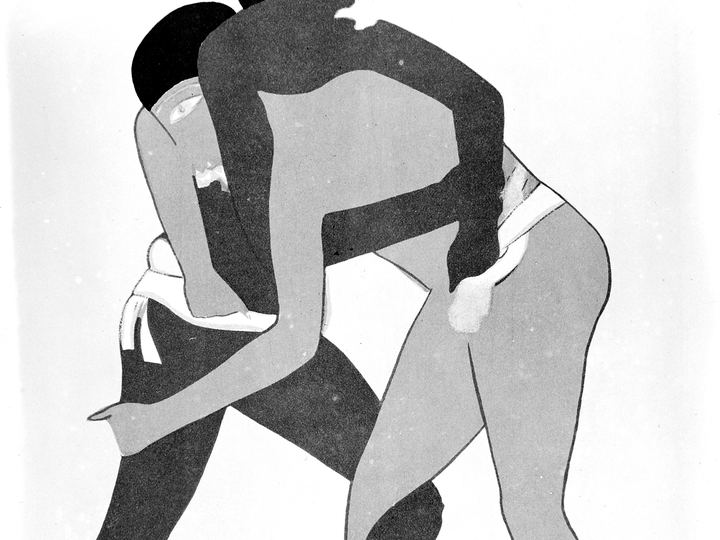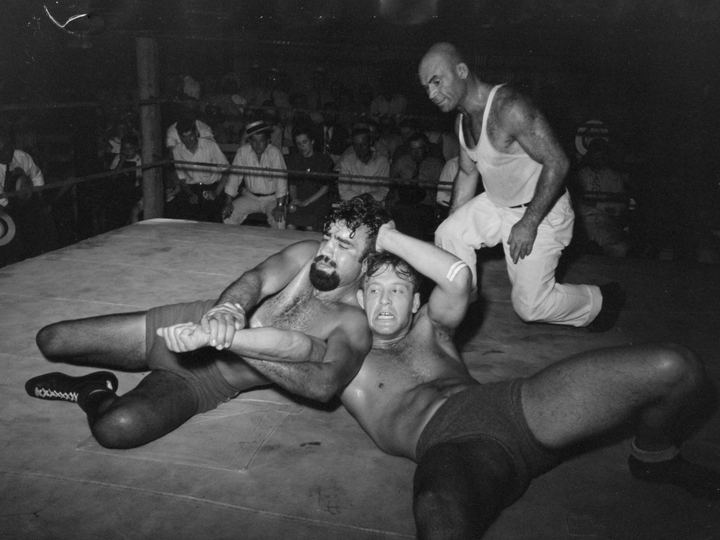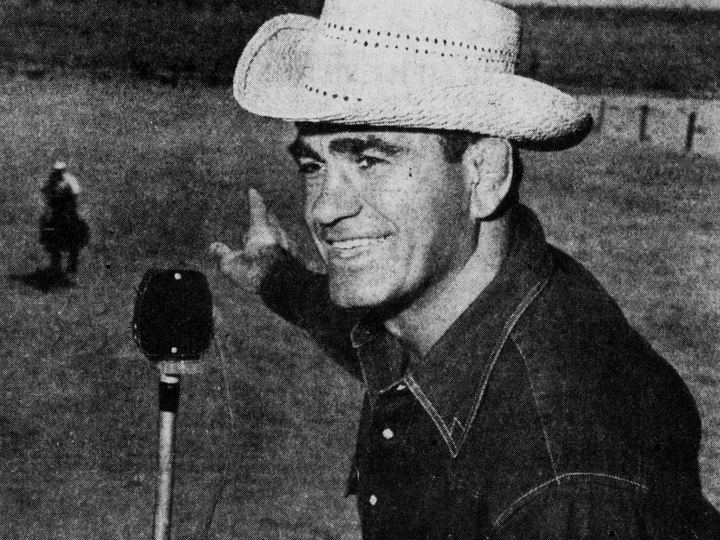
Frank Gotch vs. George Hackenschmidt
The rivalry that made wrestling front-page news. An Iowa farm boy against the Russian Lion: the 1908 and 1911 Gotch and Hackenschmidt matches turned wrestling into a national sensation.
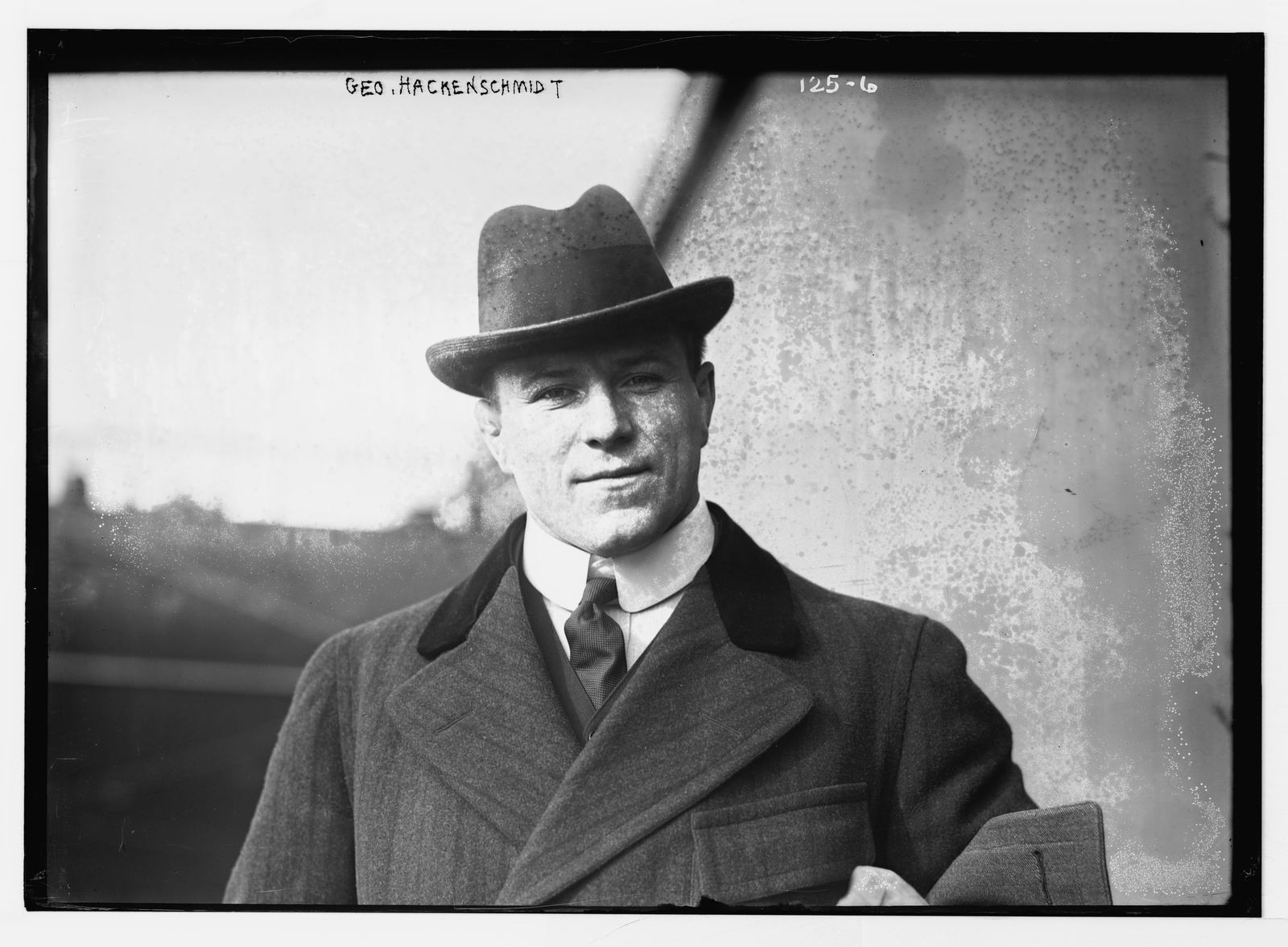
George Hackenschmidt, Bain News Service photo: Bain News Service, publisher, Public domain
The Russian Lion
George Hackenschmidt was born in 1877 in Dorpat, now Tartu in Estonia, then part of the Russian Empire. He was a strongman as much as a wrestler, famous for his physique and his lifting feats, and he became a star of European Greco-Roman wrestling. Fans called him the Russian Lion. In England he drew huge crowds and was widely treated as the best wrestler in the world.
Hackenschmidt was also a thinker. He wrote books on health and strength and later on philosophy, and he lived until 1968, long enough to see wrestling transformed by television.
The farm boy from Iowa
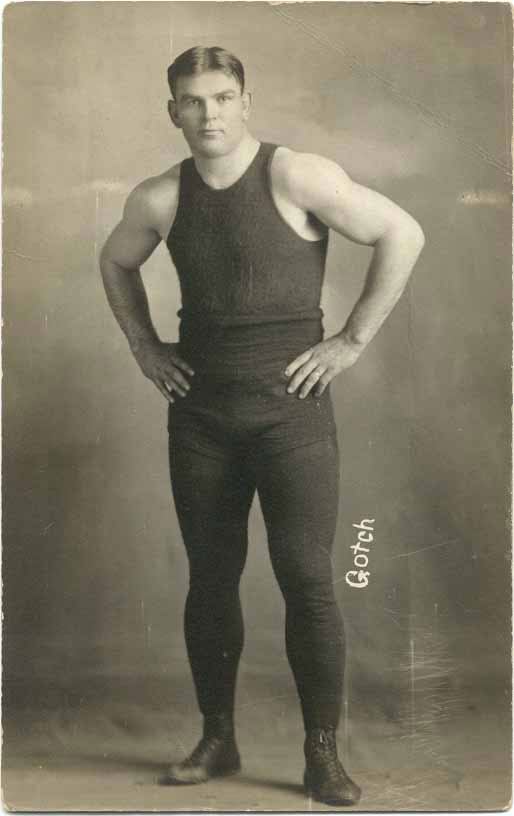
Frank Gotch was born on a farm near Humboldt, Iowa, in the late 1870s; records differ between 1877 and 1878. He learned catch-as-catch-can wrestling under the famous trainer Martin "Farmer" Burns and became known for his speed, conditioning and the toe hold, a leg lock that could end a match quickly. In 1904 he beat Tom Jenkins for the American heavyweight championship.
Gotch was not a giant, but he was relentless. He wore opponents down with constant pressure, then hunted for a leg or an arm. Before his famous rivalry he also spent time wrestling in Alaska during the Klondike gold rush era, taking on miners for prize money under the name Frank Kennedy. That rough training gave him a reputation as a fighter who never tired.
Two hours in Chicago
The two met on April 3, 1908, at Dexter Park Pavilion in Chicago. The match turned into a grinding struggle lasting about two hours without a fall. Hackenschmidt complained that Gotch was oiled, fouling and roughing him up, and finally gave up the contest. Gotch was crowned world champion, and the bout became one of the most talked-about sporting events in America.
The rematch and the questions
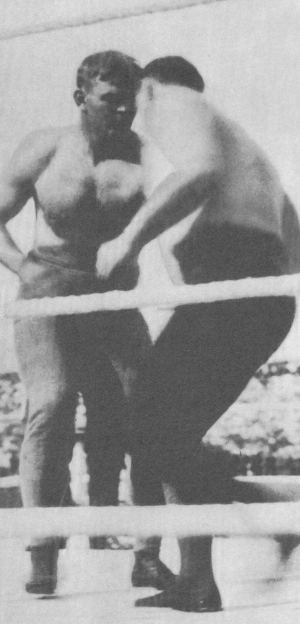
The rematch came on September 4, 1911, at Comiskey Park in Chicago, in front of a crowd reported at around 30,000 people, with a record gate of about $87,000. Hackenschmidt went in with an injured knee, and Gotch won two straight falls in a short time. Stories have long circulated that the injury was caused deliberately in training, though accounts differ and the truth is uncertain.
Gotch retired as champion in 1913 and died in December 1917, around the age of 40. His era is remembered as the high point of the legitimate catch wrestling championship, and as the moment when promoters realized how much money a well-built rivalry between hero and foreign challenger could make.
- WWE: Frank Gotch
- Wikipedia: Frank Gotch
- Wikipedia: George Hackenschmidt
- Library of Congress: Gotch, Frank (authority record)
Facts on this page were checked against these sources.
- George Hackenschmidt, Bain News Service photo: Bain News Service, publisher, Public domain
- Frank Gotch: Unknown author, Public domain
- Gotch and Hackenschmidt in the 1911 rematch: Unknown author, Public domain
Text written by Entertainment Wrestling World.