Gorgeous George
The showman who taught Ali to talk. With platinum curls, satin robes and a perfumed ring, Gorgeous George became an early TV star and showed a young Muhammad Ali the power of brash talk.
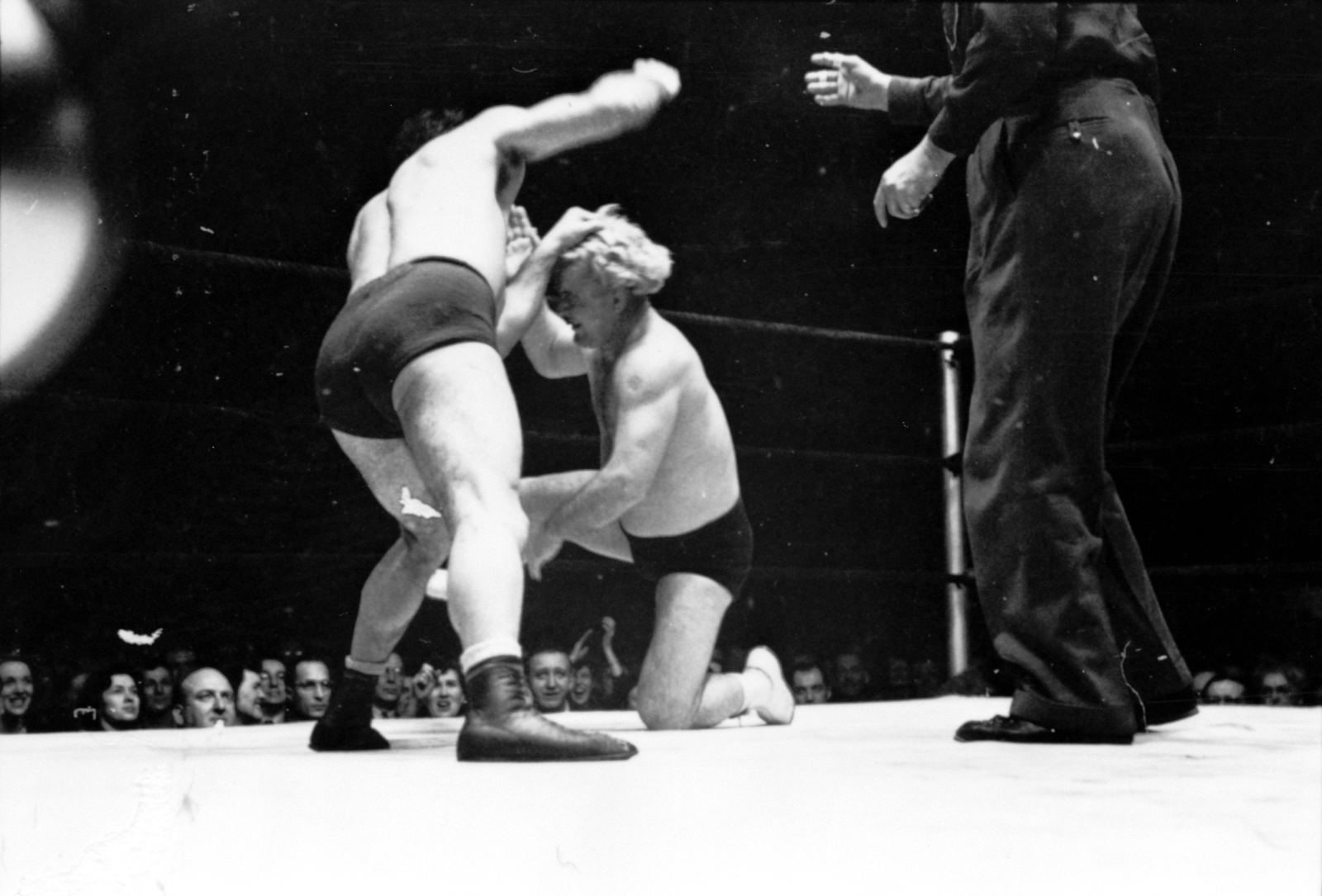
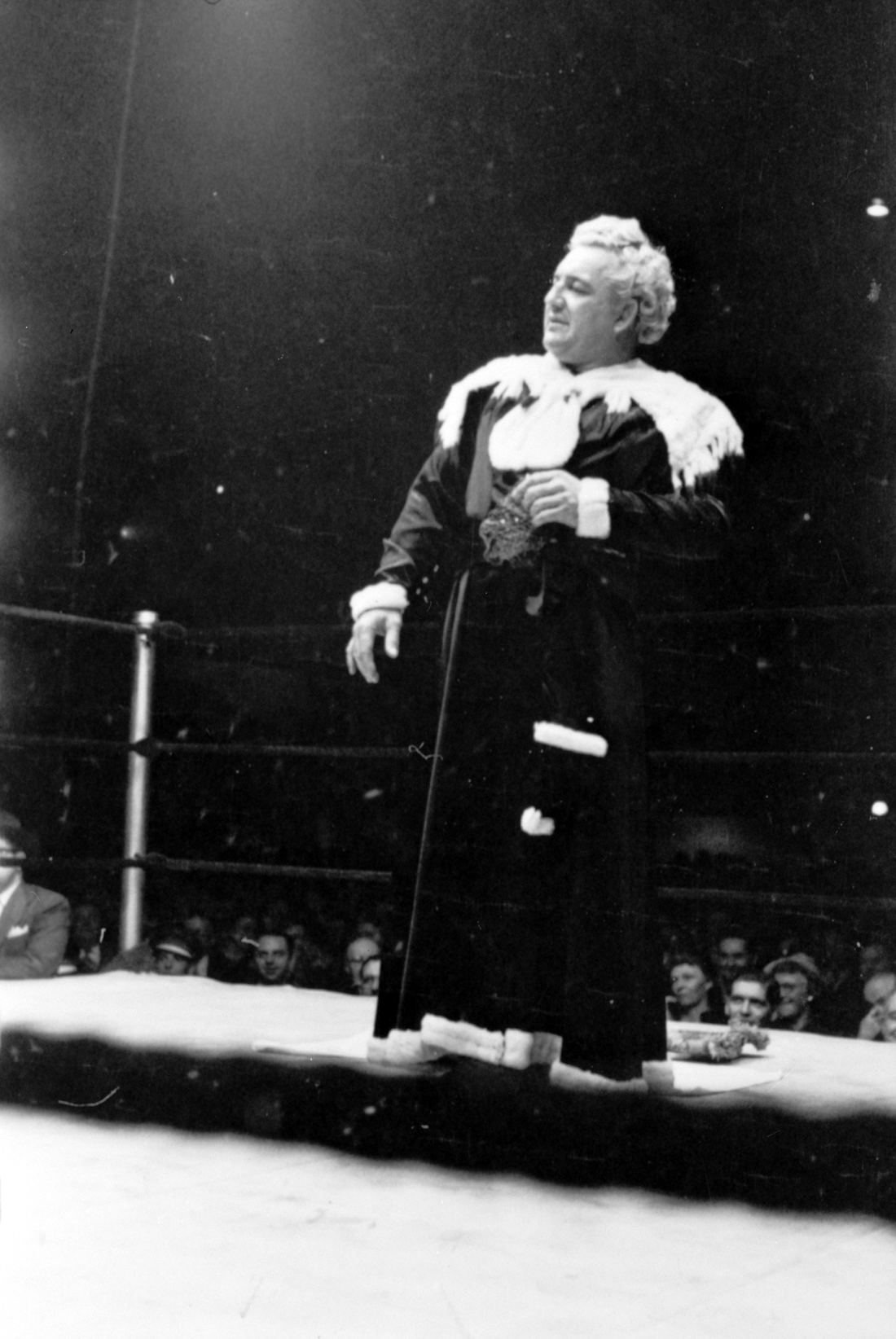
Gorgeous George in the ring, photographed by Stanley Kubrick, 1949: Stanley Kubrick, Public domain
From ordinary grappler to sensation
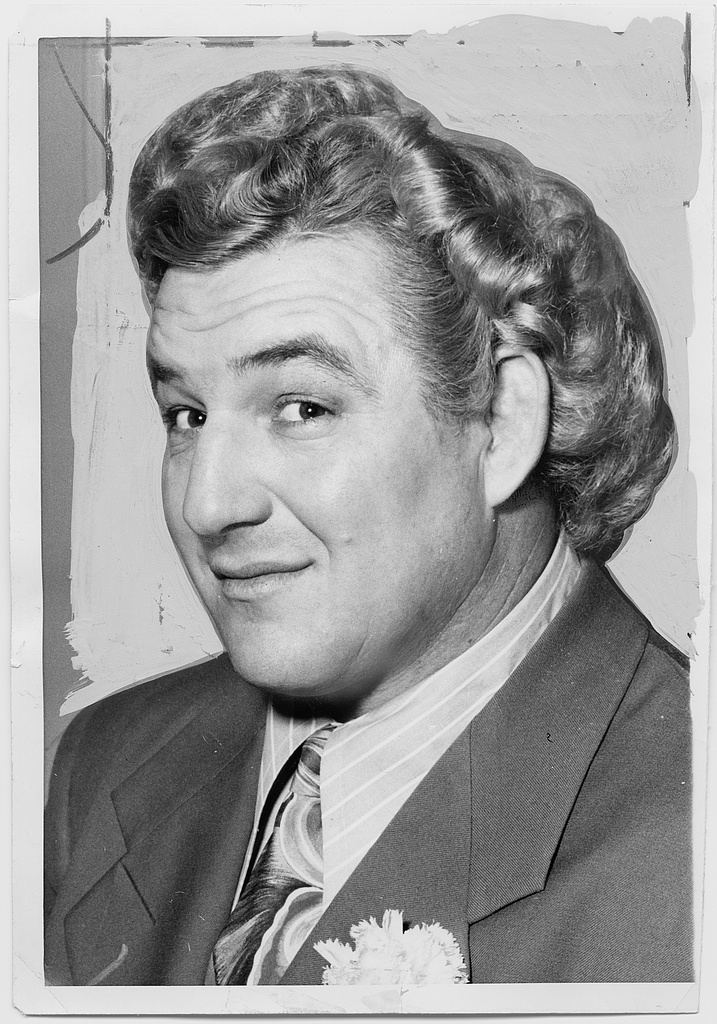
George Wagner was born in Nebraska in 1915 and grew up in Texas. For years he was a solid but unremarkable wrestler. In 1941, in Eugene, Oregon, he began to reinvent himself. He grew his hair long, dyed it platinum blond, set it in elaborate waves, and wore extravagant robes into the ring. He became Gorgeous George.
His entrance was a show by itself. Music played as he strolled slowly to the ring. A valet sprayed the ring with perfume before George would set foot in it, and he handed out gold-plated bobby pins he called Georgie pins to the crowd. Fans howled with outrage, and that was exactly the point.
This wrestler taught Muhammad Ali how to talk trash
Flamboyant wrestler Gorgeous George, a 1940s-50s TV star, inspired a young Cassius Clay (Muhammad Ali) to adopt his boastful style in 1961.
YouTube @EntertainmentWrestlingWorld (launching soon). Photos in this Short: Gorgeous George robe.jpg - Unknown authorUnknown author (Public domain) via Wikimedia Commons | Gorgeous George headshot circa 1950s.jpg - Library of Congress (Public domain) via Wikimedia Commons | Muhammad Ali NYWTS.jpg - Ira Rosenberg (Public domain) via Wikimedia Commons | Zbigniew Pietrzykowski and Muhammad Ali 1960.jpg - Unknown authorUnknown author (Public domain) via Wikimedia Commons | Muhammad Ali standing over Sonny Liston.jpg - John Rooney (Public domain) via Wikimedia Commons | Bell
Made for television
George arrived at the perfect moment. In the late 1940s, American television was new and hungry for programs that were cheap and easy to film. Wrestling fit perfectly, and Gorgeous George was the most watchable thing on it. Viewers who had never cared about wrestling tuned in to see the preening villain they loved to hate. He became one of the best-known entertainers in the country and earned far more than most wrestlers of his time.
His act also changed how wrestlers thought about character. Before George, most performers were simply tough men in plain trunks. After him, promoters and wrestlers understood that a costume, an entrance and a strong personality could make someone a star. The entrance music, robes and attitude seen in arenas today all owe something to him.
The lesson for a young boxer
In 1961, a young Olympic champion named Cassius Clay, later Muhammad Ali, crossed paths with George in Las Vegas. Ali later described how struck he was by the huge crowd, which he recalled as 15,000 people, that had paid to see George, many of them hoping to watch him get beaten. The boxer realized that boasting and outrageous confidence could sell tickets just as well as talent.
Ali's rhyming predictions and loud self-promotion became famous, and he openly credited George as an influence. That makes a perfumed wrestler from Nebraska one of the hidden ancestors of modern sports trash talk.
Legacy
George's health declined as his career wound down, and he died of a heart attack in December 1963 at 48. His influence reached far beyond wrestling: singers, boxers and generations of flamboyant villains borrowed from his act. The idea that a character can be as important as the athlete started, in many ways, with him.
Facts on this page were checked against these sources.
- Gorgeous George in the ring, photographed by Stanley Kubrick, 1949: Stanley Kubrick, Public domain
- Gorgeous George, circa 1950s: Library of Congress, Public domain
- Gorgeous George for Look magazine, 1949: Stanley Kubrick, Public domain
- Short photos: Gorgeous George robe.jpg - Unknown authorUnknown author (Public domain) via Wikimedia Commons | Gorgeous George headshot circa 1950s.jpg - Library of Congress (Public domain) via Wikimedia Commons | Muhammad Ali NYWTS.jpg - Ira Rosenberg (Public domain) via Wikimedia Commons | Zbigniew Pietrzykowski and Muhammad Ali 1960.jpg - Unknown authorUnknown author (Public domain) via Wikimedia Commons | Muhammad Ali standing over Sonny Liston.jpg - John Rooney (Public domain) via Wikimedia Commons | Bellagio Las Vegas December 2013 panorama.jpg - King of Hearts (CC BY-SA 3.0) via Wikimedia Commons | Las Vegas Strip from Resorts World February 2023 HDR 1.jpg - King of Hearts (CC BY-SA 4.0) via Wikimedia Commons
Text written by Entertainment Wrestling World.